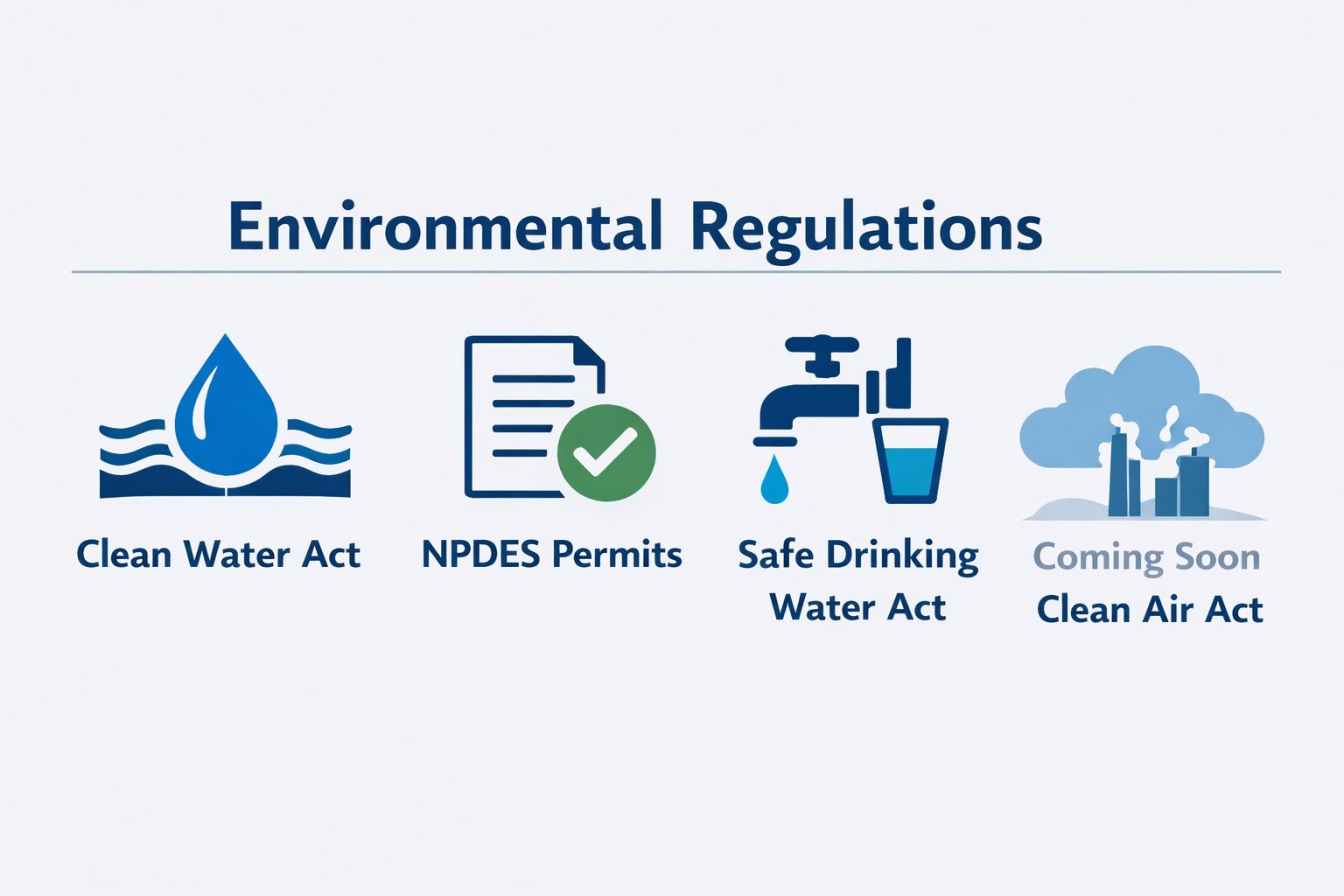
The Clean Water Act is a federal law that regulates the discharge of pollutants into the waters of the United States. Its primary goal is to protect rivers, lakes, streams, wetlands, and coastal waters from contamination. The Act establishes the basic structure for controlling water pollution by setting quality standards and requiring permits for certain types of discharges.
For municipalities, industries, and construction sites, the Clean Water Act often comes into play when activities could impact stormwater runoff, wastewater discharge, or surface water quality. Compliance helps ensure that communities maintain safe and healthy water systems while reducing environmental harm.
The National Pollutant Discharge Elimination System (NPDES) is the permitting program created under the Clean Water Act. It requires entities that discharge pollutants into surface waters to obtain and follow specific permit conditions.
NPDES permits apply to municipal wastewater treatment plants, industrial facilities, and certain construction and stormwater activities. These permits outline monitoring, reporting, and operational requirements to limit pollutants entering waterways. Understanding NPDES requirements is essential for maintaining compliance and preventing enforcement actions.
The Safe Drinking Water Act protects the quality of drinking water in the United States. It authorizes the Environmental Protection Agency (EPA) to set standards for contaminants in public water systems and requires regular monitoring to ensure those standards are met.
Public water systems must test for regulated contaminants and take corrective action when levels exceed allowable limits. The Act also addresses underground injection control and source water protection. The goal is simple: ensure that water delivered to homes, schools, and businesses is safe to drink.
The National Environmental Policy Act requires federal agencies to evaluate the environmental impacts of major projects before making decisions. This evaluation process helps identify potential environmental risks and encourages informed planning.
Projects involving federal funding, federal land, or federal permits often require environmental review under NEPA. The process may include Environmental Assessments (EAs) or Environmental Impact Statements (EISs), depending on project scale. NEPA promotes transparency and accountability in development and infrastructure planning.
The California Environmental Quality Act is the state-level environmental review law that applies to many public and private projects in California. CEQA requires agencies to identify and disclose environmental impacts before approving a project.
If significant impacts are identified, mitigation measures must be considered to reduce those effects. CEQA applies to a wide range of developments, including infrastructure, housing, and commercial projects. Understanding CEQA is essential for project planning and regulatory compliance within California.
An overview of the Clean Air Act and its role in regulating air pollutants and emissions standards will be added as DFT expands its educational offerings.
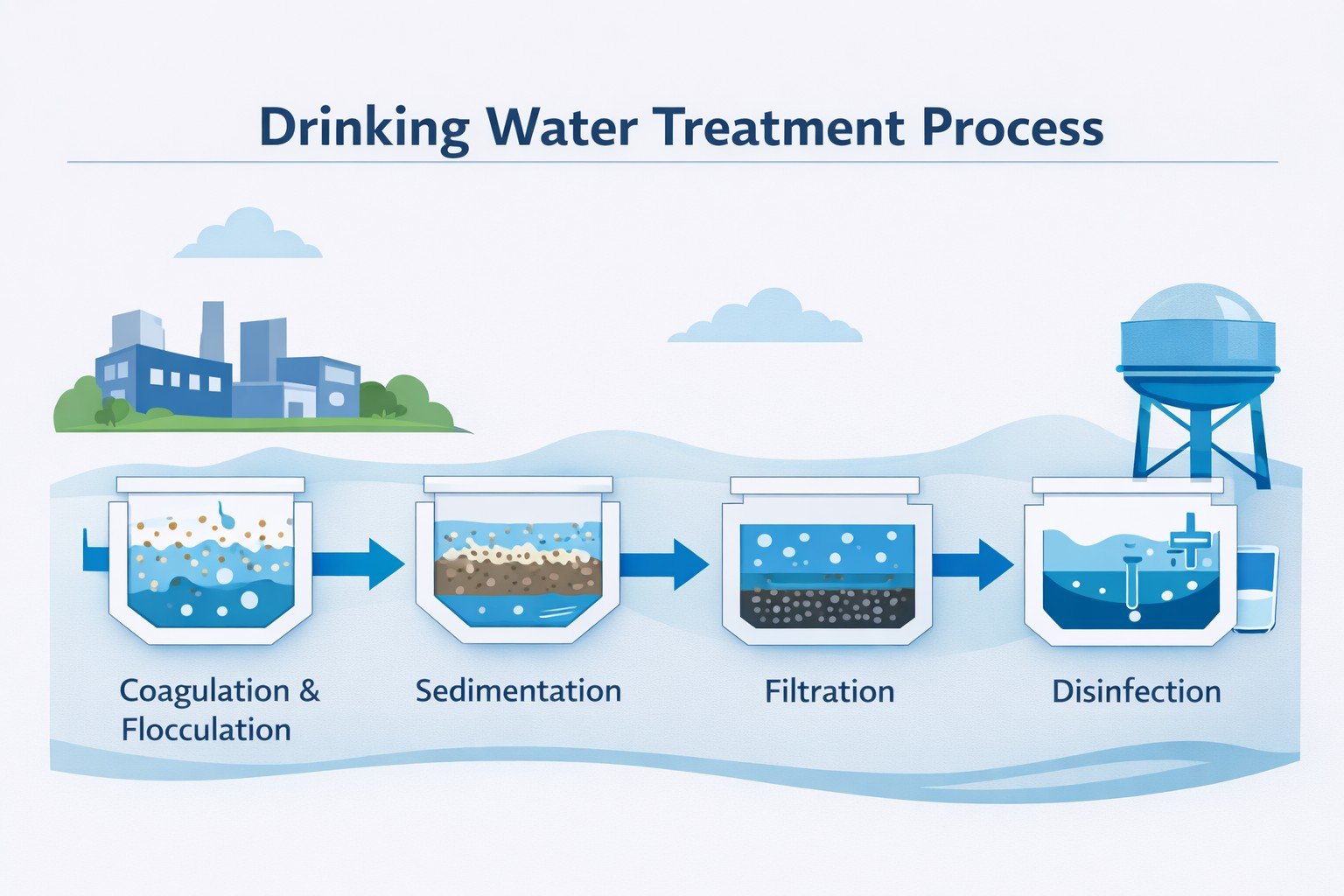
Drinking water treatment is the process used to make raw water safe for human consumption. Water is typically sourced from rivers, lakes, reservoirs, or groundwater wells and must go through several treatment steps before reaching homes and businesses.
The process often includes coagulation and flocculation, sedimentation, filtration, and disinfection. Treatment standards are regulated under the Safe Drinking Water Act to ensure public health protection.
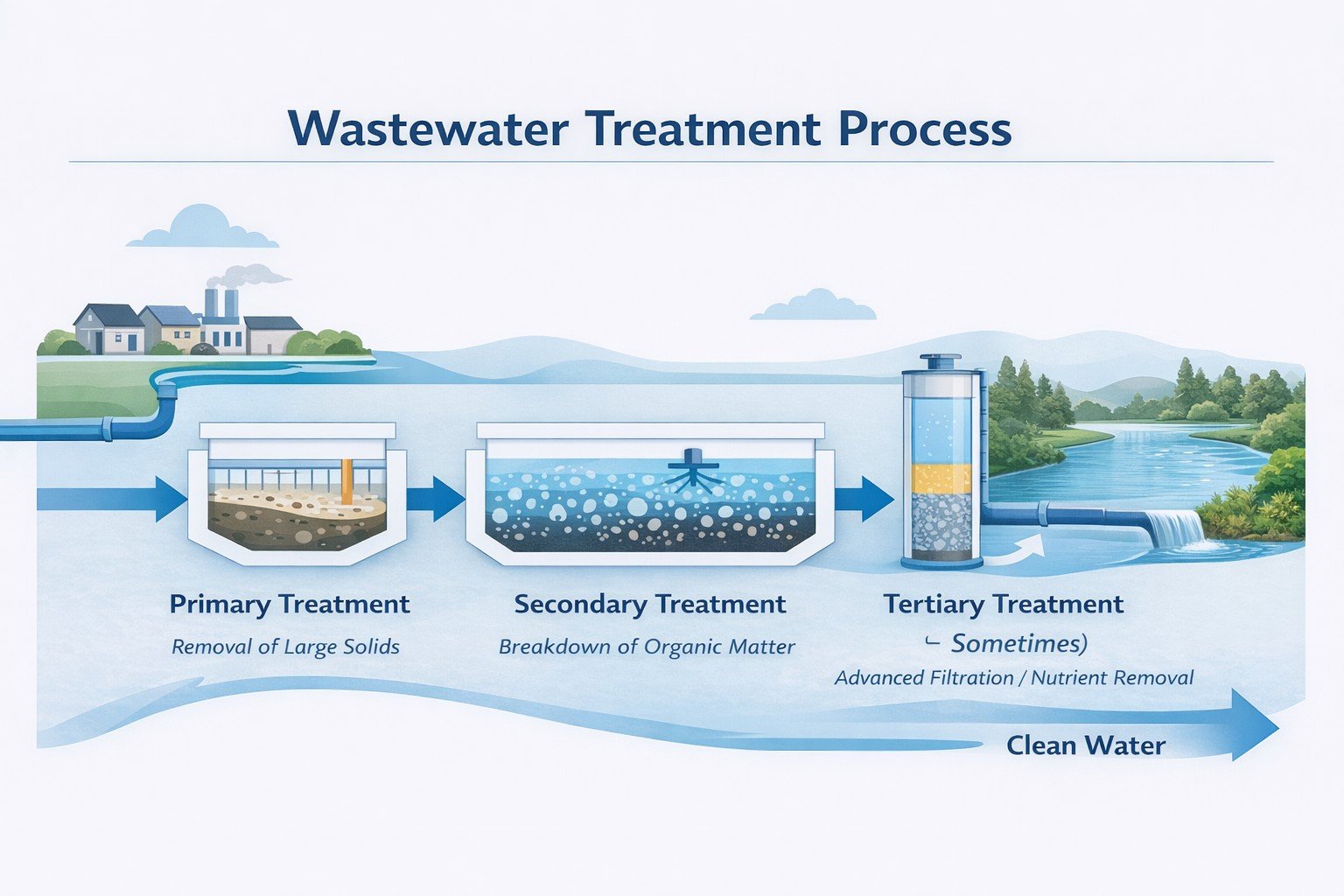
Wastewater treatment removes contaminants from water used in homes, businesses, and industries before it is discharged back into the environment.
The process typically includes primary treatment (removal of large solids), secondary treatment (biological processes that break down organic matter), and sometimes tertiary treatment (advanced filtration or nutrient removal). Treated water must meet permit standards before being released into rivers or lakes.
Water distribution systems deliver treated drinking water through networks of pipes, pumps, valves, and storage tanks. Wastewater collection systems transport used water to treatment facilities. Proper maintenance of both systems prevents leaks, overflows, and contamination risks.
Biosolids are nutrient-rich materials resulting from wastewater treatment. When properly treated, they can be reused in agriculture or land restoration. Many treatment plants use anaerobic digestion to produce renewable biogas, supporting sustainability goals.
The urban water cycle describes how water moves through a community — from source collection to treatment, distribution, use, wastewater processing, and environmental return. Stormwater management is a critical component to protect surface waters from pollution.